A Study on the Execution of Anne Boleyn and briefly on Media Portrayals. I’ll be honest, this started as a school project. They told us we had to write an article for school. So, I wrote this, but I couldn't use it!! So, I've decided to use it for my blog!:
A Study on the Execution of Anne Boleyn
Review of the Primary Sources on the first Queen of England to lose her head
Followed by a brief discussion of her depictions in media
By: Mason Thomas
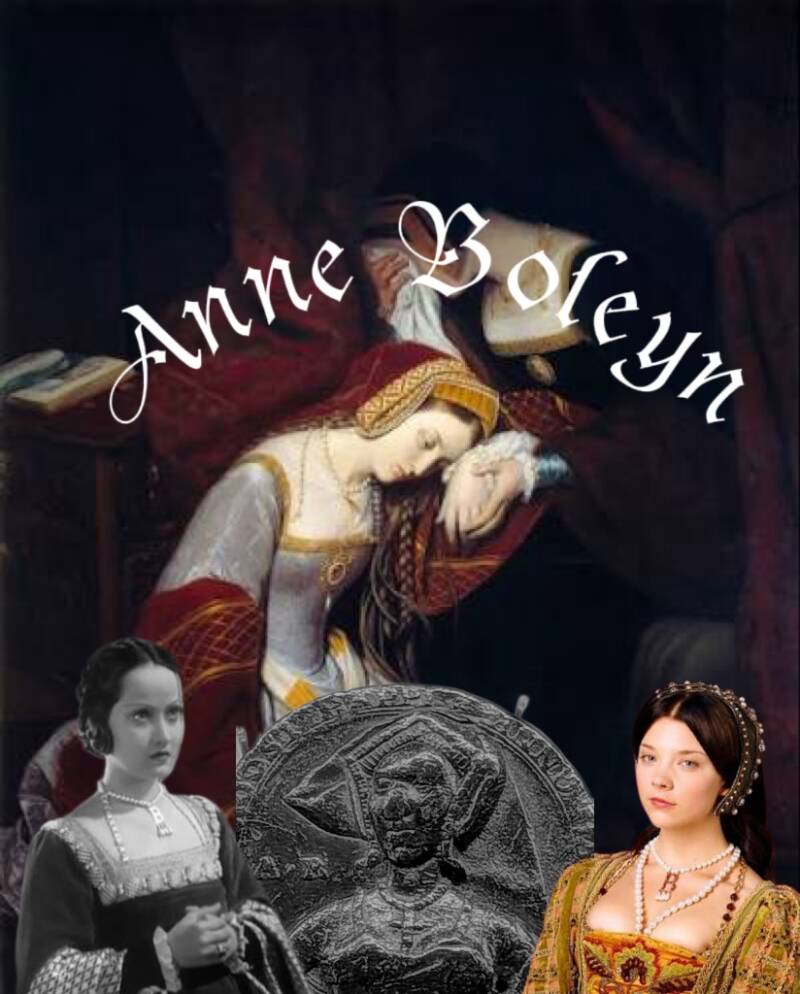
Anne Boleyn maintains her reputation as a cultural phenomenon hundreds of years after her death, despite her unpopularity in life. Her reputation has been cemented by shows, movies, and books such as ¨The Tudors¨ and ¨The Other Boleyn Girl¨ and resulted in millions of people around the world finding interest in her story. This interest is fully understandable, with her education in the court of Margaret of Austria, regarded as the ultimate finishing school for girls in Europe. She also served as Lady-in-waiting to Henry the Eighth's sister Mary, who was briefly Queen of France. There are lots of things we do not know about Anne, such as her birthday, yet despite this there is one thing that is for certain: her execution.
On May 2nd, 1536, Anne was arrested. May 15th, she was put on trial and sentenced to death for Treason, Adultery, and Incest. The punishment for Treason in Tudor England was; for men, Hanging, Drawing, and Quartering, whereas women would burn alive at the stake. Henry, claiming to be moved by pity, said ¨the head of the same Anne shall be … cut off¨ on the Tower Green within the Tower of London. On May 19th, 1536, after some delays, Anne's head was struck from her body. Her Executioner was an expert swordsman from Calais, in the English territories in France. This land is what also enabled King Henry VIII, as well as the monarchs before him to use the title ¨King of France,¨ although this title fell out of use after his daughter Mary lost Calais to the French after an ill-advised military move.
A comparison on the Primary Sources on her Execution
Thanks to Claire Ridgway, finding these sources is very easy as she has links to them in an article on her website ¨The Anne Boleyn Files¨ which I am super thankful for. I´m going to review some of the sources and compare them to try and paint the most accurate picture possible of her death.
The Spanish Chronicle:
The Spanish Chronicle is what I consider the most biased and anti-Anne source.
¨THE King ordered the Queen to be beheaded. He had sent a week before to St. Omer for a headsman who could cut off the head with a sword instead of an axe, and nine days after they sent he arrived. The Queen was then told to confess, as she must die the next day, and she begged that she might be executed within the Tower, and that no foreigner should see her. So they erected the scaffold in the great courtyard of the Tower, and the next morning they brought her out. She would not confess, but showed a devilish spirit, and was as gay as if she was not going to die. When she arrived at the scaffold she was dressed in a night-robe of damask, with a red damask skirt, and a netted coif over her hair. This lady was very graceful, and had a long neck; and when she mounted the scaffold she saw on it many gentlemen, amongst them being the headsman, who was dressed like the rest, and not as executioner ; and she looked around her on all sides to see the great number of people present, for although she was executed inside, there was a great crowd. They would not admit any foreigner, except one who had got in the night before, and who took good note of all that passed. And as the lady looked all round, she began to say these words, " Do not think, good people, that I am sorry to die, or that I have done anything to deserve this death. My fault has been my great pride, and the great crime I committed in getting the King to leave my mistress Queen Katherine for my sake, and I pray God to pardon me for it. I say to you all that eve:^lung they have accused me of is false,
^ Anne was beheaded on the 19th of May, 1536.¨
There are some problems with this source. This speech is clearly biased. Had Anne made such a speech, more people would have written it down. The mention of the Red Kirtle is also debatable as being a colour of Catholic Martyrdom, not to mention very bright to the point it would stand out from the white coif and dark night-robe. Now, I am not here to discredit the claim of the red kirtle, as it would also blend in with any blood and potentially help ease her ladies as they lay her body and head in the arrow chest for burial in the Chapel of St. Peter ad Vincula inside the Tower of London. Simply all I state is that someone else would likely have mentioned it,
Wriothesleys Chronicle:
This account is rather long, so I shall only take the pieces which I deem important. I will keep the original formatting and spelling for the sake of authenticity.
¨The Fridaye followinge. bein^e the 19th day of May. 1536, and Queene Anne
. beheaded in
the 28 th yeare of King Henry the VIII th , at eight of the clocke the Tower with
in the morninge, Anne Bulleyn, Queene, was brought to execution 6 a sworde on the greene within the Tower of London, by the great White Tower; the Lord Chauncelloure of England, the Duke of Richmond, Duke of Suffolke, with the moste of the Kings Councell, as erles, lordes, and nobles of this realme, beinge present at the same; allso the Major of London, with the Alldermen and Sheriffs, and certayne of the best craftes of London, beinge there present allso. On a scaffolde made there for the sayde execution the sayde Queen Ann sayde thus: Maisters, I here humblye submitt me to the lawe as the lawe hath judged me, f and as for myne offences, I here accuse no man, God knoweth them; I remitt them to God, beseechinge hi m to have mercye on my sowle, and I beseche Jesu save my sovereigne and maister the Kinge, the moste godlye, noble, and gentle Prince that is, and longe to reigne over yow; which wordes were spoken with a goodlye smilinge countenance; 8 and this done, she kneeled downe on her knees and sayde: To Jesu Christe I commend my sowle; b and suddenlye the hangman smote of her heade at a strokewith a sworde ; d her bodye with the head was buried in the Chappell 6 within the Tower of London, in the queere there, the same daye at afternoone, when she had reygned as Queene three yeares, lackinge 14 dayes, from her coronation to her death.¨
This is an account of which I have nearly no troubles. Her speech here is similar to most accounts, and any differences may be accounted for as the writer trying to remember what she said, assuming he could not remember it word for word. Should I have to cite a certain grievance, I should like to mention the statement of ¨28th year of King Henry the Eighth¨ which means one of two things. Either A. The author is stating Henrys Age, or B. The author is referring to the year of Henrys reign. Should he be referring to age, they would be wrong as Henry was in his mid 40s by this point. Should he be referring to the year of Henrys reign, he would still be inaccurate as April 1536 would mark the 27th year of Henrys reign, although this is just me nitpicking. I plan to review one more source before coming up with my idea of how it went down and then going on to briefly discuss her media portrayals
Halls Chronicle: ¨ON May day were a solempne lustes kept at Grenewyche, and sodainly from the lustes the kyng departed hauyng not aboue vi. persons with him, and came, in the euenyng fro Grenewyche in his place at Westminster. Of this sodain departyng many men mused, but moste chiefely the quene, who the next day was apprehended and brought fro Grenewyche to the Tower of London, where after she was arreigned of high treason, and condempned. Also at thesame tyme was likewyse apprehended, the lorde-Rocheforde brother to thesayd Quene, and Henry Norrys, Marke Smeton, Wyllyam a Bruton and sir Fraunces Weston all of the kynges priuy chamber. All these were likewise committed to the Tower and after arreigned and condempned of high treason. And all the, gentlemen were beheaded on the Skaffolde at the Tower hyll : But the Quene. was with . a sworde,. beheaded within the Tower. And these folowyng were the woordes that she spake the day of her death whiche was the xix. day of May, 1536. ..,.,,. , „,.. ,.„, , Good Christen people, I am come hether to dye, for aecqrdyng to the lawe and by theThcword<:s lawe I am iudged to dye, and therefore I wyll speake nothyng against it. I am come hether AnneeBoito accuse no man, nor to speake anythyngp.f that; w hero f, I am. .accused and condempned ^Jh* her to dye, but I pray God saue the king.and send him long to reigne ouer you, for a gentler nor a more mercyfull prince was there neuer: and^o me.he ..was euer a good, a gentle, & soueraigne lorde. And if any persone will medle of my cause, I require them to iudge the best. And thus I take my leue of the worlde and of you. all, and I heartely desyre you all to pray for me. O lorde haue mercy, on. me, to. God I comende my soule. And then she kneled doune saying: To Christ I commende my soule, lesu receiue my soule, diuers tymes, till that her head was stryken of with the sworde. And on the Assencion day folowyng, the kyng ware whyte for mournyng. The weke before Whitsontyde the kyng maryed lady lane doughter to the right worshipfull sir Ihon Seymour knight, whiche at Whitsontyde was openlye shewed as Queue. The viii. day of lune the kyng held his high court of Parliament in the whiche Parliament the kynges two first manages, that is to say with the lady Katheryne, and with the Lady Anne Bulleyn were both adiudged vnlawful, as more at large appereth in the acte in the booke of statutes. In the Parliament ceason lorde Thomas Hawarde without the kynges assent aftied the lady Margaret Douglas daughter to the quene of Scottes and nece to the kyng: for whiche presumpteous acte he was attainted of treason, and an acte made for like offenders, and so he dyed in the Tower, and she was long there as prisoner.In the tyme of this Parliament, the bishoppes and all the clergie of the realmc helde a solempne conuocacion at Paules churche in Lodon where after much disputacion and debating of matters they published a booke of religion intitled, Articles deuised by the kinges highnes &c. In this booke is specially mencioned but iii. Sacrarnentcs, with the whiche the Lyncolneshyremen (I meane their ignoraunt priestes) were offended, and of that occasion depraued the kynges doynges. And this was their first beginnyng, as after ye shall plainly heare.¨
Unfortunately I was unable to cut this down, and I´ve had to use the full page. You may have some trouble reading it as in Tudor England, English was not standardized and spelling could be done how you choose (a good example being the Tyndale Bible, an English Bible translation from 1536 which was considered heretical.) Again, very few problems here.
Now we get on to how I believe it went down (Note: some parts of this will be taken from www.the-tudor-teen.com, my blog. It will still be my own writing as the blog is written and owned by me.):
Anne had trouble sleeping the night prior. If she did get any sleep, it was minimal, but it's somewhat agreed she did not rest. She wore a dark-grey damask gown, beneath which she dawned a Red Kirtle. To top it off she wore an English Hood, and an ermine-trimmed fur cloak. She was surprisingly calm; something noted by Sir William Kingston, the constable of the Tower. Just a few yards away, a scaffold had been built upon the tower green. Anne was initially supposed to die the 18th of May, but delays forced it onto the 19th. it was 7am when Anne received Holy Communion from John Skypp. She swore her innocence again. She was adamant she had never betrayed His Majesty. Anne was meant to die at 8am; but there was another delay, as the scaffold was unfinished and no crowd had yet assembled. She spent the next hour with the women assigned to her in the Tower. They weren’t her friends. They had been chosen for their loyalty to the king. They had shared her last days, and according to Kingston, Anne told them to be brave and not to cry. She reminded them of her innocence and the peace she had made with Lord God. 9am, Anne is led to the scaffold. She mounts the three steps and gives her speech:
"Good Christian people, I am come hither to die, for according to the law, and by the law I am judged to die, and therefore I will speak nothing against it. I am come hither to accuse no man, nor to speak anything of that, whereof I am accused and condemned to die, but I pray God save the king and send him long to reign over you, for a gentler nor a more merciful prince was there never: and to me he was ever a good, a gentle and sovereign lord. And if any person will meddle of my cause, I require them to judge the best. And thus I take my leave of the world and of you all, and I heartily desire you all to pray for me. O Lord have mercy on me, to God I commend my soul."
Her ladies remove her hood, replacing it with a linen coif, and blindfolding her. She kneels. The executioner, in an attempt to distract her, having slipped off his shoes and removed his sword from the hay walked up and called for his sword, perhaps giving a clap,which made Anne move her head to where the voice was. Taking this opportunity, he strikes. Her head had been severed. Quickly her ladies covered her in a white sheet and put her body in a wooden arrow chest. Hurriedly after, Anne was laid to rest in the floorboards of the Chapel of St. Peter ad Vincula. She may have held hope till the end that Henry would spare her.
Anne Boleyn in media, a brief discussion: Wolf Hall, The Tudors, SIX.
Anne has been portrayed lots in media, but I will only discuss three.
Wolf Hall
A portrayal I rather enjoy, Claire Foy does an excellent job as Anne. Trying to keep it brief, it maintains a fair level of accuracy while also being entertaining.
The Tudors
I honestly don´t have much to say about this one. I hate it. Don´t get me wrong, the acting is good, but it is terribly inaccurate and has led to many toxic Anne Boleyn fans.
SIX
Catchy songs, not too inaccurate but certainly not a good source, and entertaining. I certainly have nothing bad to say about it.
With that, I finish my article. No matter what, Anne has been cemented in pop-culture and is unlikely to be forgotten. Her story being both inspirational and sad, certainly serves as a cautionary tale. Anne was doomed to die since April 1536. To be fair, she had committed Treason. She talked of the kings death, ¨should his Majesty be gathered unto God, you should seek to have me. You wish to have deadmans boots.¨ At the end of the day, She rests somewhat undisturbed and hopefully in peace.
Sources:
Every first hand source can be found here: https://www.theanneboleynfiles.com/resources/primary-sources-for-studying-anne-boleyn/
https://www.the-tudor-teen.com/2874749_the-last-hours-of-anne-boleyn
https://www.biblestudytools.com/tyn/
https://www.youtube.com/watch?v=gBczwBsGCqM
https://www.youtube.com/watch?v=Ceb7kOvztAk
https://www.youtube.com/watch?v=am-PX_1Ylx8
Add comment
Comments